

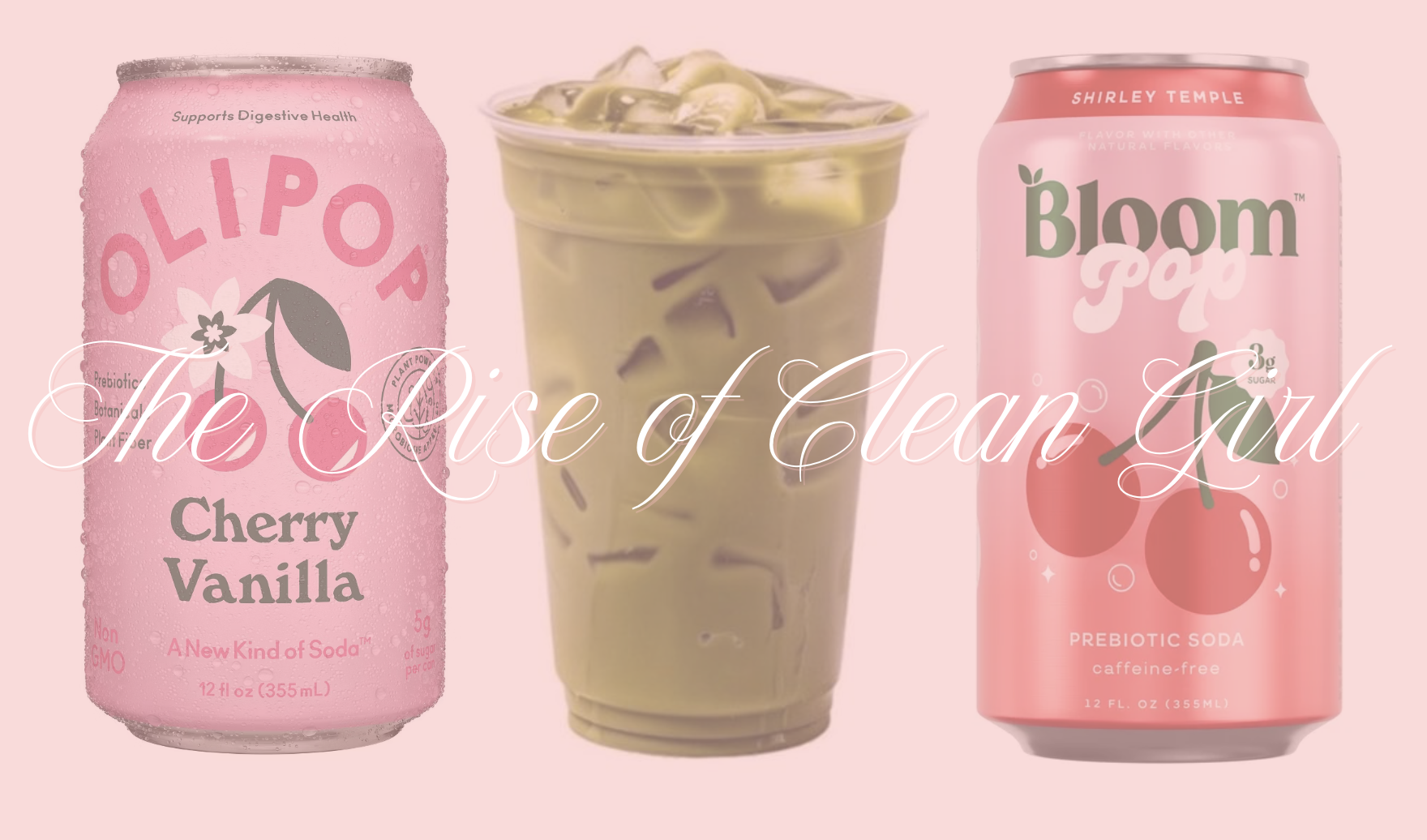
If you’ve been on TikTok for more than five minutes, you already know the vibe. The slicked-back bun. The gold hoops. The dewy skin that somehow looks effortless but definitely required effort. The glass cup filled with bright green matcha over perfectly cubed ice. And next to it? A pastel can labeled prebiotic, gut pop, or functional soda.

Welcome to the era of clean girl wellness drinks.
Somewhere between skincare fridges and Sunday reset routines, beverages stopped being just beverages. They became accessories. A Poppi in your hand says something. A Bloom greens scoop in your morning routine video says something. An Olipop in your aesthetic fridge restock says something. These drinks are no longer just about taste — they’re about identity.
But beneath the glossy branding and soft color palettes, there’s a question worth asking: are these drinks actually healthier, or are we just really good at romanticizing minimal packaging and buzzwords?
The clean girl aesthetic is built on simplicity. Neutral tones. Clean lines. No chaos. That same energy has completely taken over drink marketing. Instead of loud soda logos and neon sugar rush vibes, we get muted pinks, sage greens, soft oranges, and fonts that look like they belong on a skincare label. The messaging feels gentle and empowering. It doesn’t yell “diet.” It whispers “balance.” It doesn’t say “lose weight.” It says “support your gut.” It feels softer, smarter, more evolved.
And that’s exactly why it works.
Feminine wellness culture

Brands like Bloom, Poppi, and Olipop have mastered this visual language. Bloom leans heavily into feminine wellness culture. Their greens powders and Bloom Pop sodas live in pastel containers that feel like they belong on a marble bathroom counter next to your favorite lip oil. The marketing centers around morning routines, bloating fixes, glowing skin, and feeling your best. It’s less about hardcore nutrition science and more about becoming “that girl” — the organized, hydrated, glowing version of yourself who wakes up early and has her life together.
Poppi took soda and gave it a rebrand. Instead of being the “bad” sugary drink you were told to avoid, it presents itself as a better choice. Lower sugar. Added prebiotics. Bright but curated packaging. Influencers hold it like it’s part of their outfit. It’s soda without the guilt, indulgence without the rebellion. Olipop does something similar, blending nostalgia with wellness. It tastes like a childhood treat but is wrapped in botanical, gut-friendly language that makes it feel elevated and intentional.
And to be fair, these drinks are often lower in sugar than traditional sodas. That’s not nothing. Swapping a 35-gram sugar soda for something with 2 to 5 grams is a meaningful difference for blood sugar and overall intake. Many of these drinks include added fiber in the form of prebiotics, which can support gut bacteria. On paper, they are improvements over classic soda formulas.
But here’s where things get interesting.
The health benefits are usually modest. The amount of prebiotic fiber in one can isn’t equivalent to eating a bowl of beans or a plate of vegetables. Greens powders don’t replace actual greens in terms of fiber content and satiety. These drinks are not harmful, but they’re also not miracle workers. The glow-up effect they promise is often more emotional than biological.
A lot of what makes them feel transformative is the branding.
Words like “gut health,” “functional,” and “clean ingredients” sound scientific, but they’re often loosely defined. There’s no strict regulatory definition for “functional beverage.” “Clean” doesn’t have a formal legal meaning in food labeling. The language is intentionally broad, allowing brands to imply benefits without making specific, measurable claims. It creates what marketers call a health halo — one positive trait, like low sugar, makes us assume the entire product is deeply nourishing.
And when that halo is wrapped in pastel packaging and shown in a perfectly lit fridge restock video, it becomes irresistible.
This is where the diet culture conversation quietly enters the room.
Old-school diet culture was loud. It was calorie counts on menus, fat-free everything, SlimFast commercials, and Diet Coke as a personality trait. It told you explicitly what not to eat. It made indulgence feel rebellious and shameful at the same time.

The clean girl wellness era doesn’t shout like that. It whispers. Instead of focusing on weight loss, it talks about bloating, inflammation, hormone balance, and gut optimization. Instead of labeling foods as “bad,” it suggests that some choices are more aligned, more balanced, more elevated. The messaging feels empowering. You’re not restricting — you’re upgrading.
But the underlying current can feel familiar. There’s still a subtle moral hierarchy of food and drinks. A bright pink prebiotic soda feels virtuous. A traditional cola feels careless. A matcha feels disciplined. A caramel frappuccino feels chaotic. The language changed, but the idea that certain choices make you better or more in control hasn’t completely disappeared.
That doesn’t mean everyone who drinks Bloom or Poppi is trapped in diet culture. For many people, these drinks genuinely feel like a balanced middle ground. They still get something fizzy and fun, just with less sugar. That can be a positive shift. The nuance matters. Lower sugar options can be helpful, especially in a culture where ultra-sweet beverages are everywhere.
The problem isn’t the existence of these drinks. It’s the pressure that sometimes comes with them.
When wellness becomes aesthetic performance, it stops being just about health and starts being about identity. You’re not just choosing a drink because you’re thirsty. You’re choosing a drink that aligns with the version of yourself you want to project. The girl who drinks Olipop is put-together. The girl who mixes Bloom greens every morning is disciplined. The girl who orders matcha is calm and glowy and in control.
Social media amplifies this. These drinks are viral because they photograph beautifully. They fit seamlessly into “what I eat in a day” videos and Sunday reset montages. They’re colorful enough to pop on camera but muted enough to feel sophisticated. They serve as props in a larger lifestyle narrative.
People are craving a narrative.
In a chaotic world, the clean girl aesthetic offers structure. It offers routines. It offers the illusion of control. A can labeled “gut health” feels like you’re doing something proactive for yourself, even if the effect is small. It feels intentional. And intention feels powerful.

So are these drinks a scam? No. Are they revolutionary health tools? Also no.
They live somewhere in the middle.
They’re slightly healthier than traditional sodas. They’re thoughtfully branded. They tap into a cultural shift where people care more about ingredients and less about extreme dieting. But they also benefit from a soft rebranding of old diet culture themes — purity, control, optimization — wrapped in softer language and prettier packaging.
The key is awareness.
Drink the Poppi if you like the taste. Buy the Bloom if it makes your mornings feel fun. Enjoy the Olipop if it satisfies your soda craving with less sugar. But don’t let a pastel can convince you that you’ve unlocked some secret level of wellness. Real health isn’t aesthetic. It doesn’t always look good on camera. It’s built from consistent habits, whole foods, movement, sleep, and flexibility.
The clean girl wellness drink trend is fascinating because it shows how deeply marketing shapes our idea of health. We don’t just consume products anymore — we consume identities. And right now, the identity of the glowing, balanced, gut-healthy girl is trending hard.
Sip what you love. Just don’t confuse branding with biology.
Because sometimes the glow is coming from the lighting, not the label.


