

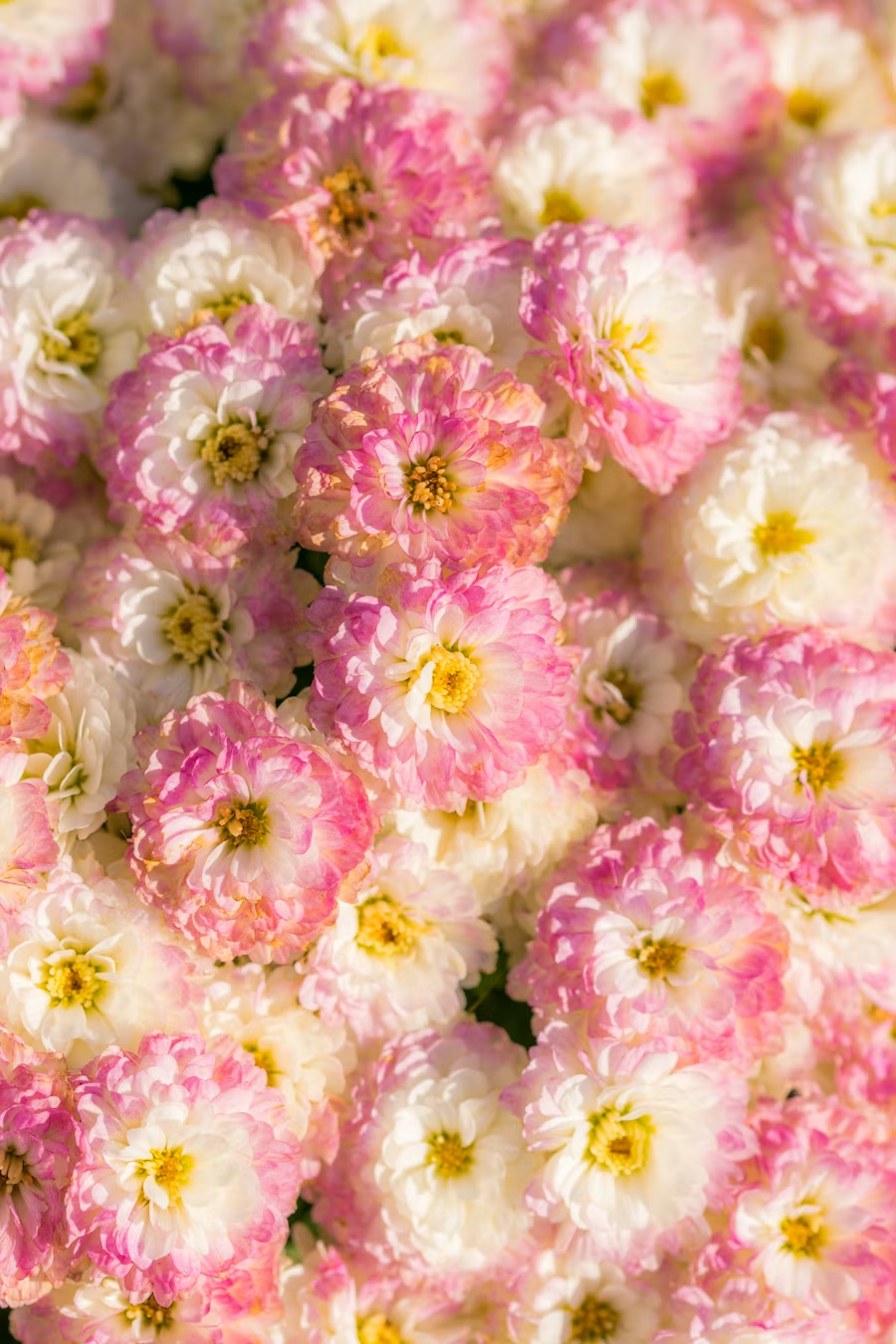
As a famous poet once wrote,
I can buy myself flowers
Write my name in the sand
Talk to myself for hours
Say things you don’t understand
Of course, these lyrics were actually written by Miley Cyrus in her song “Flowers,” which chronicles her journey of self-reliance and acceptance after a breakup. The song and music video celebrate how freeing it can be to stand on your own and how powerful it is to realize that you can give yourself the same love you are searching for in someone else.
In many ways, “Flowers” became an anthem for independence and self-worth. It resonated with so many people because it captured something most of us experience at some point: the realization that our happiness cannot depend entirely on another person. While relationships can be meaningful and fulfilling, they should never be the only source of our confidence or identity.
Even though self-love is a popular concept today, many of us do not fully understand what it actually looks like in real life. We see it everywhere on social media, in songs, and in motivational posts, but it often feels abstract. If you often find yourself wondering why you have not found the right partner or feeling stuck in the same dating cycles, the answer may be closer than you think.

What Self-Love Really Means and What It Does Not
Self-love is everywhere, from “main character energy” moments to self-care trends on social media and artists like Lizzo encouraging confidence and self-acceptance. While these messages are inspiring, they can sometimes feel oversimplified or unrealistic. Loving yourself is not something that happens overnight, and it is not always easy.
Self-love is many things, but it is not narcissism. It is not about being self-absorbed or thinking you are better than everyone else. Instead, it is about being self-aware. It is about understanding your needs, your limits, and your worth. It means recognizing that you deserve the same kindness, respect, and care that you give to others.
Self-love also is not toxic independence or pretending that you do not need anyone. Choosing to love yourself does not mean pushing people away. It means learning how to care for yourself while still allowing others to support you. Healthy independence and healthy connection can exist at the same time.
When you take care of your emotional and mental health, you are better equipped to show up for others. You are more patient, more secure, and more open to communication. You cannot pour from an empty cup. When your own needs are constantly ignored, it becomes harder to give genuine love to someone else.

Why We Chase Validation
You might feel like you already practice self-love. You take care of yourself, you have friendships, and you try to be kind to others. Yet, you still find yourself stuck in frustrating dating patterns.
Maybe it starts with meeting someone and feeling an instant connection. You talk every day, stay up late texting, and imagine what could be. Then comes months of mixed signals, unclear intentions, and emotional back-and-forth. You begin overthinking texts, rereading conversations, and analyzing every facial expression. You tell yourself it is not healthy, but somehow you still cannot walk away.
I know I have found myself, more times than I would like to admit, checking someone’s Snap score to see if it went up, refreshing my phone waiting for their name to appear, or wondering why they watched my story but did not text me. Maybe it is comparing yourself to their ex and overanalyzing how you measure up. Maybe it is replaying every conversation in your head until you have thought about it in every possible way.
These habits often come from feeling like something is missing inside of us. Without realizing it, we give another person control over our mood, confidence, and sense of worth. Their attention becomes a source of reassurance, and when it disappears, so does our peace.
If you feel more anxious about being alone than about being with the wrong person, that may not be a relationship problem. It may be a self-worth problem.
The truth is, you cannot receive from someone else what you are unable to give yourself. It sounds simple, but it is not easy. Learning to be comfortable alone takes time and effort. It requires sitting with your thoughts, reflecting on your life, and accepting who you are without needing constant external validation.
Sometimes it helps to view yourself from the outside. Imagine the person in the mirror is someone you deeply care about. Would you want them to feel ignored, insecure, or unworthy? Probably not. That person deserves love, respect, and patience, especially from themselves.

Signs of Insecurity vs. Self-Worth
One way to understand your relationship with yourself is to check in honestly.
You might be outsourcing validation if:
- Your mood depends on how quickly they respond
- You shrink your personality to avoid conflict
- You tolerate behavior that makes you uncomfortable
- You feel panic at the thought of being single
You might be grounded in self-worth if:
- You enjoy your own company
- You communicate your needs calmly
- You walk away when boundaries are crossed
- You do not chase mixed signals
None of these are meant to shame you. Most people experience both at different points in their lives. Growth is not about never feeling insecure. It is about recognizing those feelings and learning how to respond to them in healthier ways.

Practical Steps to Build Self-Love
Self-love is a practice, just like any other relationship. It takes intention and consistency. Here are a few ways to start.
Build Self-Awareness
Journal your thoughts, reflect on past relationships, and notice emotional patterns. Pay attention to what triggers insecurity or anxiety. Journaling gives your thoughts a place to exist outside of your mind, which often makes them easier to understand and manage.
Define Your Non-Negotiables
Without thinking about any specific person, decide what you need to feel safe and respected. This might include emotional honesty, healthy communication, and mutual effort. Writing out your values and boundaries helps you stay grounded instead of changing your standards for someone else.
Practice Being Alone
Take yourself on solo dates, spend time without constant texting, and learn to genuinely enjoy your own presence. Maybe it looks like a self-care night with a face mask and your favorite show. Maybe it is a solo coffee date where you sit with your thoughts instead of scrolling. Maybe it is working on a creative project, going on a long walk, or trying something new just because you want to. Learning to enjoy time alone builds confidence and independence in ways that are subtle but powerful.
It may feel strange or even uncomfortable at first, especially if you are someone who thrives around other people. Silence can feel loud when you are not used to it. But choosing to prioritize yourself and give yourself the treatment you have always hoped someone else would give you changes something internally. It boosts your energy, strengthens your self-trust, and reminds you that you are capable of creating joy on your own.
Regulate Your Emotions
Not every uncomfortable feeling needs to be fixed by someone else. Learning how to process emotions independently builds stability and resilience. Over time, this emotional awareness makes relationships feel less overwhelming and more balanced.

Why Self-Love Creates Healthier Relationships
When two secure individuals come together, relationships feel different. There is less competition and more collaboration. There is less jealousy and more trust. Conflicts become conversations rather than power struggles.
Self-love allows you to choose a partner because you want them, not because you need them to feel complete. It creates space for growth, honesty, and mutual respect.
A healthy relationship complements you. It does not complete you.
This is what makes “Flowers” so powerful. Miley is not rejecting love. She is recognizing that she can survive and thrive on her own. From that place of strength, love becomes a choice rather than a necessity.

An Empowering Reminder for Singles
If you are single right now, remember that this season is not a punishment. It is an opportunity. It is a time to grow, explore, and deepen your relationship with yourself. It is a chance to learn what you truly enjoy, what brings you peace, and what you need to feel fulfilled outside of a romantic relationship. This season allows you to build confidence, independence, and emotional strength that will benefit you for the rest of your life.
It is natural to want companionship. Wanting love does not mean you are lacking. It means you are human. It means you value connection and intimacy. Just do not let that desire overshadow the value of where you are right now. Your life is not on pause because you are single. You are still growing, succeeding, learning, and becoming the best version of yourself.
The relationship you build with yourself is the only one guaranteed to last a lifetime. Every other relationship should be built on top of that foundation, not in place of it. When you know your worth, you are less likely to settle for less than you deserve and more likely to choose relationships that support your growth.
Learning to love yourself first is not selfish. It is preparation for the healthiest, most fulfilling love you will ever experience. Never forget: you can buy yourself flowers, take yourself dancing, hold your own hand, and love yourself in ways no one else ever could.

